
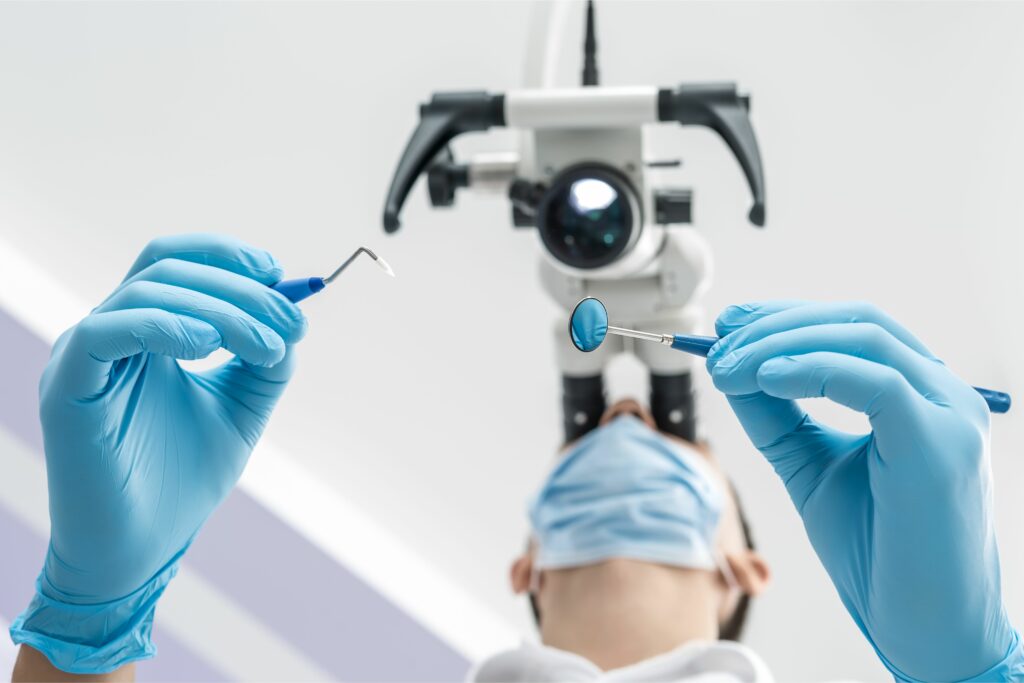
For many patients, root canal treatment is still associated with discomfort and uncertainty. However, dentistry has advanced significantly in recent years, and today there is a far more precise and reliable option available: microscopic root canal treatment.
During traditional root canal therapy, the dentist works with the naked eye, which naturally limits visibility. Root canals are extremely small and often complex, especially in back teeth, making it difficult to locate and treat every canal thoroughly. As a result, some canals may remain undetected, increasing the risk of reinfection or the need for retreatment.
Microscopic root canal treatment eliminates this uncertainty. Using a specialized dental operating microscope with up to 20x magnification, even the smallest canals and anatomical details become clearly visible. This allows the dentist to remove infected pulp tissue, clean the canals, and seal them with exceptional precision.
In practical terms, this means more thorough disinfection, more accurate filling, and maximum preservation of healthy tooth structure. The procedure is no longer performed “blindly,” but in a fully controlled, highly precise environment.
The difference in success rates is significant. While conventional root canal treatment carries a higher risk of future complications, microscopic techniques greatly improve the chances of long-term tooth preservation. This is especially important for molars, which have complex root anatomy and play a crucial role in chewing.
Microscopic root canal treatment is not only more precise—it is also more patient-friendly. The tooth is fully isolated during the procedure, allowing treatment in a clean, bacteria-free environment and the risk of later problems is reduced.
Microscope-assisted tooth-preserving treatments
It’s important to know that an inflamed tooth is not automatically lost. Thanks to modern technology, many teeth that once required extraction or repeated treatment can now be successfully saved.
The sooner you seek dental care, the greater the chance of preserving your natural tooth—helping you maintain a healthy, functional smile for years to come.